Not right away. After a hurricane, wait until officials say it is safe, photograph the damage for your insurer, and check for leaks and structural damage before you wash anything. Rinsing silt and salt off surfaces can start early with plain water; pressure washing should wait until repairs are done, and high pressure should never be aimed at damaged roofs, stucco, window seals or screens.
The best time to clean a house exterior for hurricane season is in the spring, before June 1, and the best time to inspect it is after cleaning, when problems are visible. Washing does not storm-proof anything. What it does is clear drains, gutters and tracks, expose hidden damage, and remove growth that holds moisture against walls and roofs. After a storm, the priority reverses: safety, drying and damage assessment come first, and cleaning comes later.
Know the calendar
The Atlantic hurricane season officially runs from June 1 to November 30. The National Hurricane Center puts the statistical peak on September 10, with most activity falling between mid-August and mid-October. For Miami-Dade households, that overlaps with the wettest part of the year, a stretch when frequent rain makes it harder to find dry days for roof work, painting or sealing. Anything that needs a dry surface is best done early. The National Hurricane Center's climatology page has the season's background.
How hurricane season affects your home exterior
A storm season stresses a house in four ways that cleaning can address or reveal:
- Debris. Leaves, palm fronds and loose outdoor items clog drains and, in high wind, become projectiles.
- Moisture. Weeks of rain and humidity feed mildew and algae on walls, roofs, pavers and fences.
- Salt. Coastal flooding or surge leaves salt on walls, metal and plants.
- Hidden wear. Dirt covers worn caulk, failing gaskets, loose fasteners and cracked coatings, which a storm then exploits.
A pre-season exterior checklist
| Item | Why it matters | What to do |
|---|---|---|
| Gutters, downspouts, scuppers | Clogged drains cause overflow into walls and under roofs | Clear leaves and debris; check that water exits away from the foundation |
| Roof surface | Algae holds moisture; loose tiles or lifted shingles are hazards | Soft wash if needed, then inspect; repair loose items before the season |
| Hurricane shutter tracks and hardware | Dirt and corrosion make shutters hard to close | Brush and rinse, lubricate per manufacturer, test operation |
| Windows and door seals | Dirt hides worn caulk and failing gaskets | Rinse gently; look for gaps while surfaces are clean |
| Driveway, walkways, yard drains | Debris blocks drainage and becomes projectiles | Sweep and rinse; clear inlets on your property |
| Screen enclosures and fences | Weakened screens and posts fail first | Gentle wash, then inspect fasteners and mesh |
| Generator pad and fuel storage | Oil and debris create hazards | Clean, and keep fuel stored per safety guidance |
Cleaning a roof is best handled by someone experienced in low-pressure methods. The roof cleaning guide explains why high pressure is a poor choice for both tile and shingle.
Gutters and loose items before hurricane season
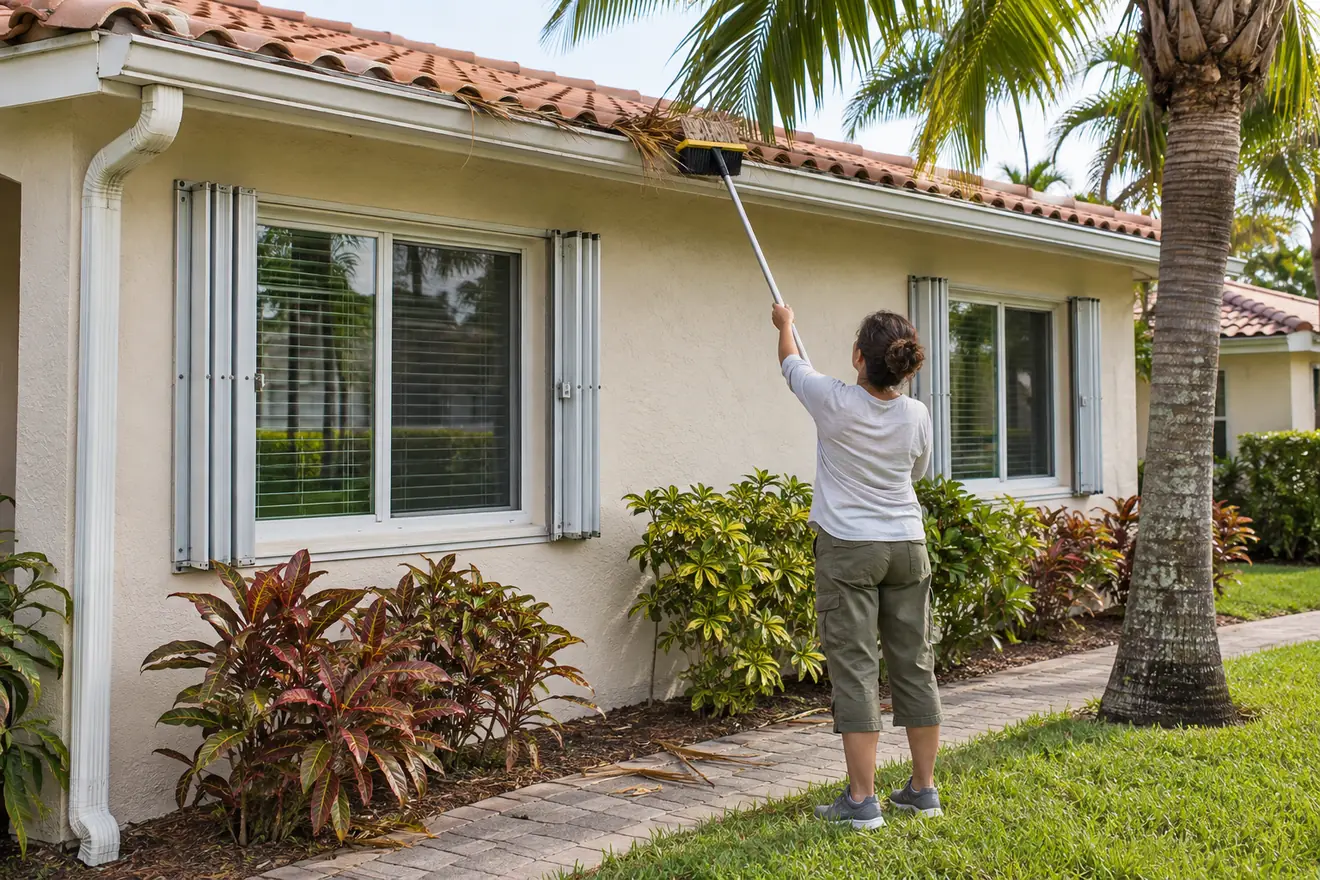
Gutter cleaning is the most useful single exterior job before a storm. The federal emergency preparedness site Ready.gov lists decluttering drains and gutters and bringing in outdoor furniture among its basic home preparations, along with considering hurricane shutters. Clear gutters, downspouts and yard drains first, then move or tie down anything the wind could throw. Wood fences and decks that stay wet through the rainy season need time to dry before any sealing, as the wood deck and fence cleaning guide explains. A stucco wall that shows streaks or hairline cracks is best checked before the season too; see the stucco washing guide for warning signs.
Cleaning versus inspection
A pressure washer is not a substitute for an inspection. If you notice cracked tiles, lifted shingles, soft fascia, loose flashing or stains that suggest leaks, call a licensed roofing contractor before washing. Roof repairs often need a permit as well; the roof guide explains the local rules. Cleaning loose or damaged components can make a problem worse, and water forced into compromised areas can cause interior damage.
Should you pressure wash after a hurricane?
Pressure washing is a later step, not a first response. Sort the work by urgency:
- Rinse early (days): silt, mud and salt, using a garden hose or low pressure, because wet organic matter breeds mildew quickly in humid weather.
- Wait for assessment: roofs, stucco, window and door seals, screens, fascia and anything that looks cracked, lifted or soft. Water forced into damaged areas can reach the interior.
- Wait for repairs and drying (weeks): pressure washing of driveways, pavers, walls and fences, and any painting or sealing afterwards.
When you do wash, a gentler method is usually the right one for storm-stressed surfaces; the soft wash vs pressure wash guide explains which method suits which surface. Rinse water carrying silt should not be sent into storm drains; the Miami-Dade wash water rules cover how to handle it.
After a storm: the order of work
- Wait for the all-clear. Do not climb on roofs or ladders in wet, windy conditions, and watch for downed power lines. Ready.gov warns that underground or downed power lines can electrically charge water, and says not to touch electrical equipment if it is wet or if you are standing in water.
- Document first. Photograph damage before cleaning so insurance records are accurate, and contact your insurer, as Ready.gov advises.
- Check for structural and water damage. Look for leaks, soaked insulation and damaged flashing before washing exteriors.
- Remove silt and debris. Mud and organic matter on patios and driveways breed mildew quickly in humid weather. Rinse early.
- Rinse salt. After coastal flooding or heavy surge, salt on walls, metal and plants should be flushed with fresh water.
- Treat growth later. Mildew often blooms within weeks after a storm. See the mold and mildew guide for how to deal with it and reduce moisture.
Ready.gov also advises wearing protective clothing, working with another person, and wearing a face covering when cleaning up mold or debris. If you run a generator for power during cleanup, Ready.gov's power outage guidance says generators and fuel should be used only outdoors, at least 20 feet from windows, doors and attached garages, and kept dry.
If floodwater entered the home, it may be contaminated, and remediation is a separate job from exterior washing. Guidance from local emergency management and your insurer should come first.
Mold and mildew after a storm
The U.S. Environmental Protection Agency's mold cleanup guidance says mold damages what it grows on, so speed matters. It says most people can clean a moldy area smaller than about 10 square feet (roughly 3 by 3 feet) themselves, by scrubbing hard surfaces with detergent and water and drying them completely. Porous materials such as ceiling tiles and carpet may have to be thrown away. Do not paint or caulk over mold, and call a professional for sewage or other contaminated water.
Hiring after a storm
Demand surges and unfamiliar crews arrive. Two Florida laws are worth knowing about:
- Price gouging. Under section 501.160, charging an unconscionable price for commodities, services or equipment needed because of an emergency is prohibited in the declared area once the governor declares a state of emergency. The prohibition lasts up to 60 days under the initial declaration unless an executive order extends it. A price is presumed unconscionable if it grossly exceeds the average charged in the 30 days before the declaration, or the average in the trade area, unless added costs explain it. Enforcement is by state attorneys and the Department of Legal Affairs, and the statute itself does not create a private right to sue. Read it on the Florida Legislature website.
- Door-to-door sales. Florida's home solicitation sale law lets buyers cancel certain deals over $25 made away from the seller's place of business until midnight of the third business day after signing. There are exceptions, including a sale that results from your own request for specific goods or services. Cancellation must be in writing, and notice sent by mail counts from the postmark.
Be careful with anyone who asks for a large deposit before starting, pushes you to sign on the spot, or offers to "do roof work" along with cleaning. The checklist in how to choose a pressure washing company is useful here. Compare at least two written quotes, and be wary of anything far above or below the rest.
Community and condo timing
Under section 720.3035, an HOA cannot deny an application for hurricane protection that meets the specifications it has adopted. Coatings, paint and work on common areas, on the other hand, still follow the community's approval process and schedules. Condominiums follow chapter 718 and their own declaration, so ask the board before scheduling. If you live in a managed community, check with the board or manager before work begins, and read the association rules guide.
Frequently Asked Questions
Should I pressure wash my roof before hurricane season?
Soft washing can remove algae and make inspection easier, but it does not strengthen the roof. Avoid high pressure, and have any repairs done by a licensed roofing contractor.
Is it safe to wash my house right after a storm?
Wait until conditions are safe and any water intrusion has been assessed. Document damage with photographs first. Rinse silt and salt early, and save deeper cleaning for after repairs.
Can pressure washing damage a house after a hurricane?
Yes. Storm-stressed roofs, stucco, window seals and screens can have cracks or gaps that are not obvious, and forced water can enter them and cause interior damage. Inspect first, repair what is damaged, and use the gentlest method that cleans the surface.
How does hurricane season affect my home's exterior?
It brings debris that clogs gutters and drains, long periods of moisture that feed mildew and algae, and salt after coastal flooding. It also exposes weak points such as worn caulk, loose fasteners and unmaintained shutters.
Should I clean my gutters before hurricane season?
Yes. Ready.gov lists decluttering drains and gutters among basic hurricane preparations. Clear gutters, downspouts and yard drains before June 1 and again before the September peak, and check that water flows away from the foundation.
Can a contractor raise prices after a hurricane?
Demand-driven increases can happen, but after a declared state of emergency Florida law prohibits unconscionable prices for needed commodities and services in the affected area. Get written quotes and compare.
Do I have to say yes to a door-to-door offer?
No. For qualifying door-to-door sales, you generally have three business days to cancel in writing. Take time to verify who you are dealing with.
Does cleaning help with insurance?
Cleaning does not repair damage or change a roof's condition, but photos of a clean, well-maintained exterior can be useful records. Ask your insurer what they require.